VERSION:
v0.1
PAGE
Systems Thinkers
SURFACE:
hux.works
/library/systems-thinkers
SUBJECT:
Paper
AUTHOR AND DATE:
HAMISH DUNCAN
09.05.26
Systems Thinkers
The minds behind the method.
Research
Introduction
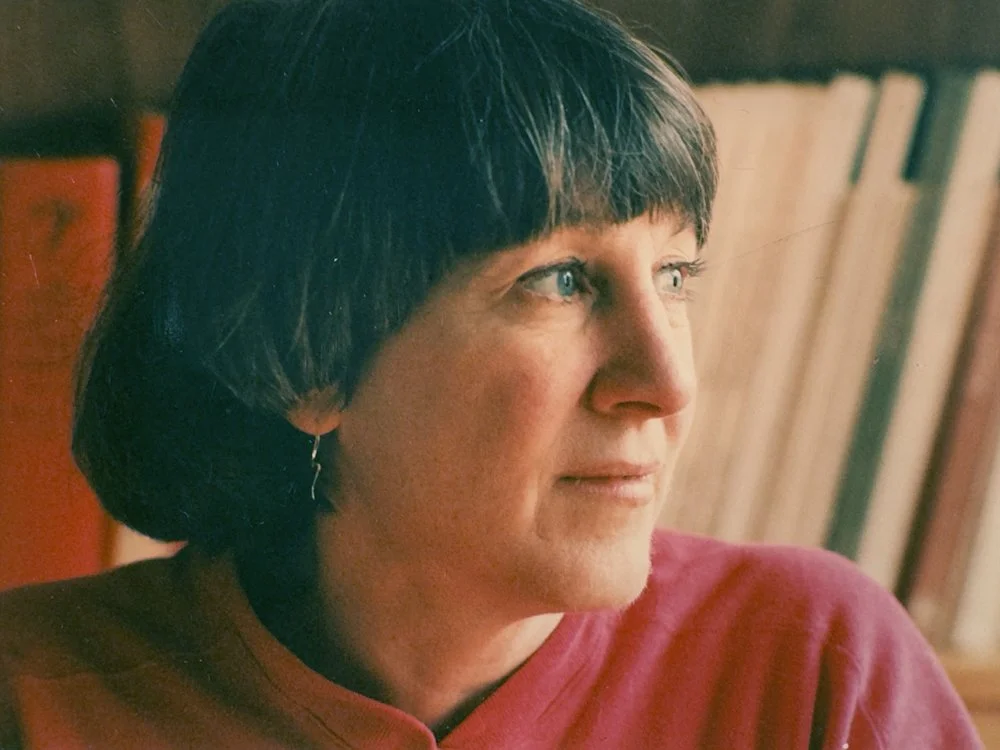
Donella Meadows
Tradition
Systems dynamics, environmental science
KEY TEXT
Thinking in Systems: A Primer (2008)
Meadows trained as a biophysicist at Harvard before joining the team at MIT that built World3 — the global resource model behind the 1972 Limits to Growth report. The book sold thirty million copies and reframed how a generation thought about economic growth, ecological limits, and the time horizons of policy.
She spent the rest of her career making systems thinking legible to people outside the academy. As a journalist, a farmer, and the founder of the Sustainability Institute in Vermont, she wrote a syndicated column called The Global Citizen for sixteen years. Her 1999 paper Leverage Points: Places to Intervene in a System remains the most cited working document in the field — a hierarchy of where, exactly, change becomes possible. Parameters near the bottom. Paradigms at the top.
The systems lens at HUX starts here. A design system is not a kit of parts. It is a set of stocks, flows, and feedback loops. Where you intervene determines what changes — and most teams intervene at the wrong level.
Touchpoint — Leverage points. Stocks and flows. The shift from event-level to structural thinking.
We can't control systems or figure them out. But we can dance with them.
Daniel Kahneman
Tradition
Behavioural economics, cognitive psychology
KEY TEXT
Thinking, Fast and Slow (2011)
Kahneman was born in Tel Aviv, raised in Nazi-occupied France, and spent the first part of his career as an Israeli army psychologist designing officer-selection protocols. The work taught him something he would test for the next sixty years — that human judgement, even expert human judgement, is far less reliable than the people doing the judging believe.
His partnership with Amos Tversky from the late 1960s onwards rewrote economics. Prospect Theory (1979) showed that people do not weigh gains and losses symmetrically. Loss aversion, anchoring, the availability heuristic, framing effects — most of the vocabulary of behavioural economics traces back to their papers. Kahneman won the Nobel Prize in Economics in 2002. Tversky had died in 1996 and could not share it.
Thinking, Fast and Slow is the late-career synthesis. Two systems — one fast, automatic, pattern-matching; one slow, deliberate, effortful. Most professional work happens in System 2. Most professional work runs out of fuel by mid-afternoon.
A foundation HUX builds on, then extends. The skull is not where cognition ends.
Touchpoint — System 1 and System 2. The model HUX extends with System 3 — extended cognition through tools, teams, and machines.

We can be blind to the obvious, and we are also blind to our blindness.
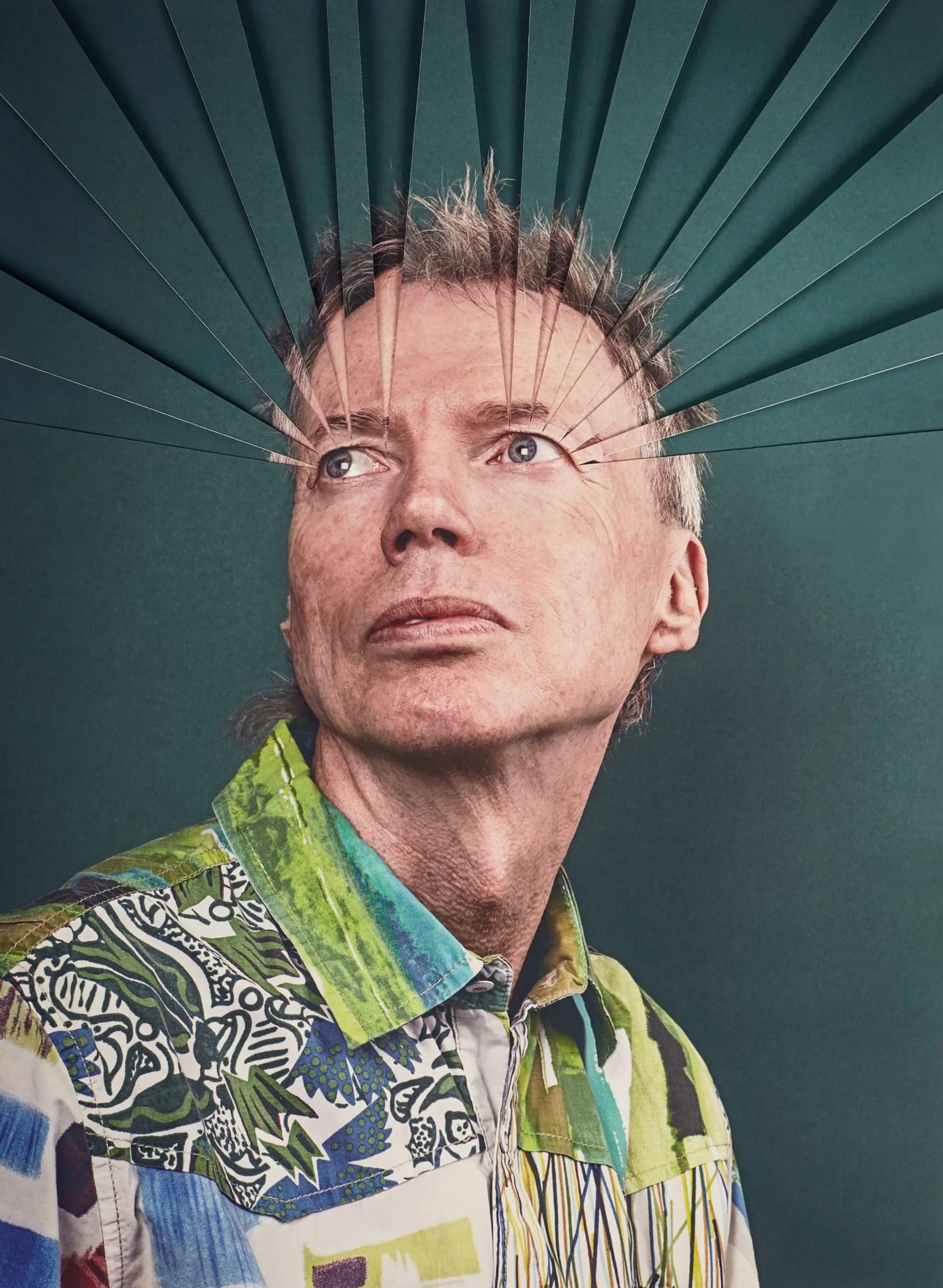
Andy Clark
Tradition
Philosophy of mind, cognitive science
KEY TEXT
Supersizing the Mind (2008), The Extended Mind (with David Chalmers, 1998)
Clark is a Scottish philosopher, currently Professor of Cognitive Philosophy at the University of Sussex. His 1998 paper with David Chalmers proposed a thought experiment that has been argued over ever since — Otto, an Alzheimer's patient, uses a notebook the way Inga uses her biological memory. If the notebook does the same cognitive work as the brain, on what principled grounds is it not part of the mind?
The argument sounds like a parlour trick. It is not. Clark's broader project — across a dozen books and three decades — is a serious attempt to redraw the boundary of cognition. Notebooks, sketchbooks, calendars, instruments, collaborators, environments. The mind is constituted by the loops it forms with the world, not by the matter inside the skull.
His more recent work on predictive processing argues that the brain is not a passive receiver but an active prediction engine — constantly modelling what comes next and updating against the world. Together, the extended mind and the predictive brain describe a cognitive system that is thoroughly embedded, embodied, and tooled.
This is where AI sits in the HUX model. Not a replacement for the mind. An extension of it. A coherent system extends cognition. An incoherent one fragments it.
Touchpoint — The Extended Mind. Why a machine-readable design system is a cognitive instrument, not just an asset library.
We are natural-born cyborgs, forever ready to merge our mental activities with the operations of pen, paper, and electronics."
Edwin Hutchins
Tradition
Cognitive anthropology, distributed cognition
KEY TEXT
Cognition in the Wild (1995)
Hutchins is an anthropologist at UC San Diego who spent years studying how navigation actually happens on a US Navy ship. Not in one navigator's head. Across a team — charts, instruments, protocols, watch-standers passing information through standardised forms, the bridge as a calculating machine made of people and paper.
The book that came out of it, Cognition in the Wild, is a foundational text in cognitive science. Hutchins's argument is that the cognitive unit is not the individual mind. It is the system — people, tools, representations, and the procedures that connect them. The ship navigates. No one person does.
He extended the work to airline cockpits, where pilots, instruments, checklists, and air traffic control form a similar distributed cognitive system. The same model holds for surgical theatres, trading floors, newsrooms, and design teams.
Replace "navigation" with "design system" and the picture is exact. The team thinks together through the artefacts they share. Tokens, components, naming conventions, documentation — these are not deliverables. They are the shared representations through which the team computes.
Touchpoint — Distributed cognition. Why design as a shared language is the unit of work, not the individual designer.
Humans create their cognitive powers by creating the environments in which they exercise those powers.
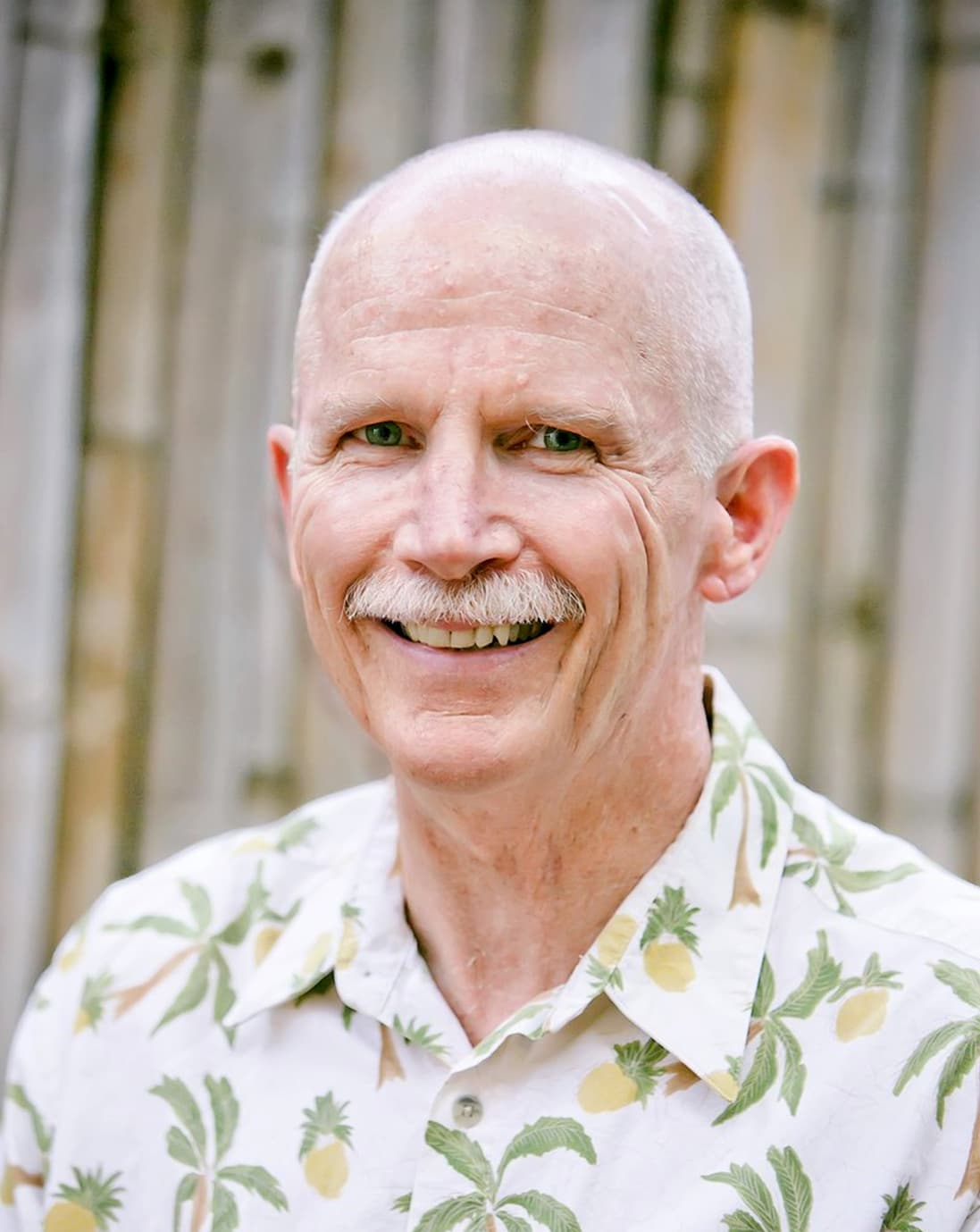
Annie Murphy Paul
Tradition
Science journalism, learning research
KEY TEXT
The Extended Mind: The Power of Thinking Outside the Brain (2021)
Paul is an American science writer who spent two decades reporting on cognitive psychology and learning research — for Time, The New York Times Magazine, Slate, and Scientific American. The Extended Mind is the synthesis of that work. It takes Clark and Chalmers's philosophical argument, gathers two decades of empirical research that supports it, and turns the whole thing into a working manual.
The book is organised around three categories of extra-neural resource. Thinking with the body — gesture, movement, sensation, interoception. Thinking with the environment — natural settings, built spaces, the things we surround ourselves with. Thinking with other people — imitation, expert cognition, group thought. Each chapter pairs the science with a case study in how to apply it.
Her contribution is translation. What Clark argues philosophically and Hutchins documents anthropologically, Paul makes operational. She is the one who answers the practical question — given that the mind extends, what should you actually do differently on Monday morning?
For HUX, this is the working layer. Tools, environments, teams, and rituals are not productivity hacks. They are the substrate of thought.
Touchpoint — Extended cognition as a working method, not a thought experiment.

When we use our bodies, our spaces, and our relationships to think, we think better.
Richard Brautigan
Tradition
Counterculture poetry
KEY TEXT
All Watched Over by Machines of Loving Grace (1967)
Brautigan is the outlier on this list. Not a systems theorist. Not a cognitive scientist. A poet and novelist associated with the San Francisco counterculture, best known for Trout Fishing in America (1967) and a body of slim, strange, deceptively simple books.
In 1967 he printed All Watched Over by Machines of Loving Grace as a free broadside — handed out on the streets of Haight-Ashbury. The poem imagines a "cybernetic ecology" where mammals and computers live together "in mutually programming harmony." It was written sixty years early. The image is utopian and slightly uneasy at once — which is the right register for the question of how much we hand over to the systems we build.
The poem matters here because it names the stakes. Hutchins describes the cognitive system. Clark argues the philosophy. Paul makes it practical. Meadows shows how to intervene. Brautigan asks the question none of them quite answer — what is this for, and who is it serving?
He is the conscience the discipline needs. The reminder that systems, however elegant, however machine-readable, however coherent, are built for people — and that the moment you forget that, you have built the wrong thing.
Touchpoint — The reminder that systems serve people, not the other way round.
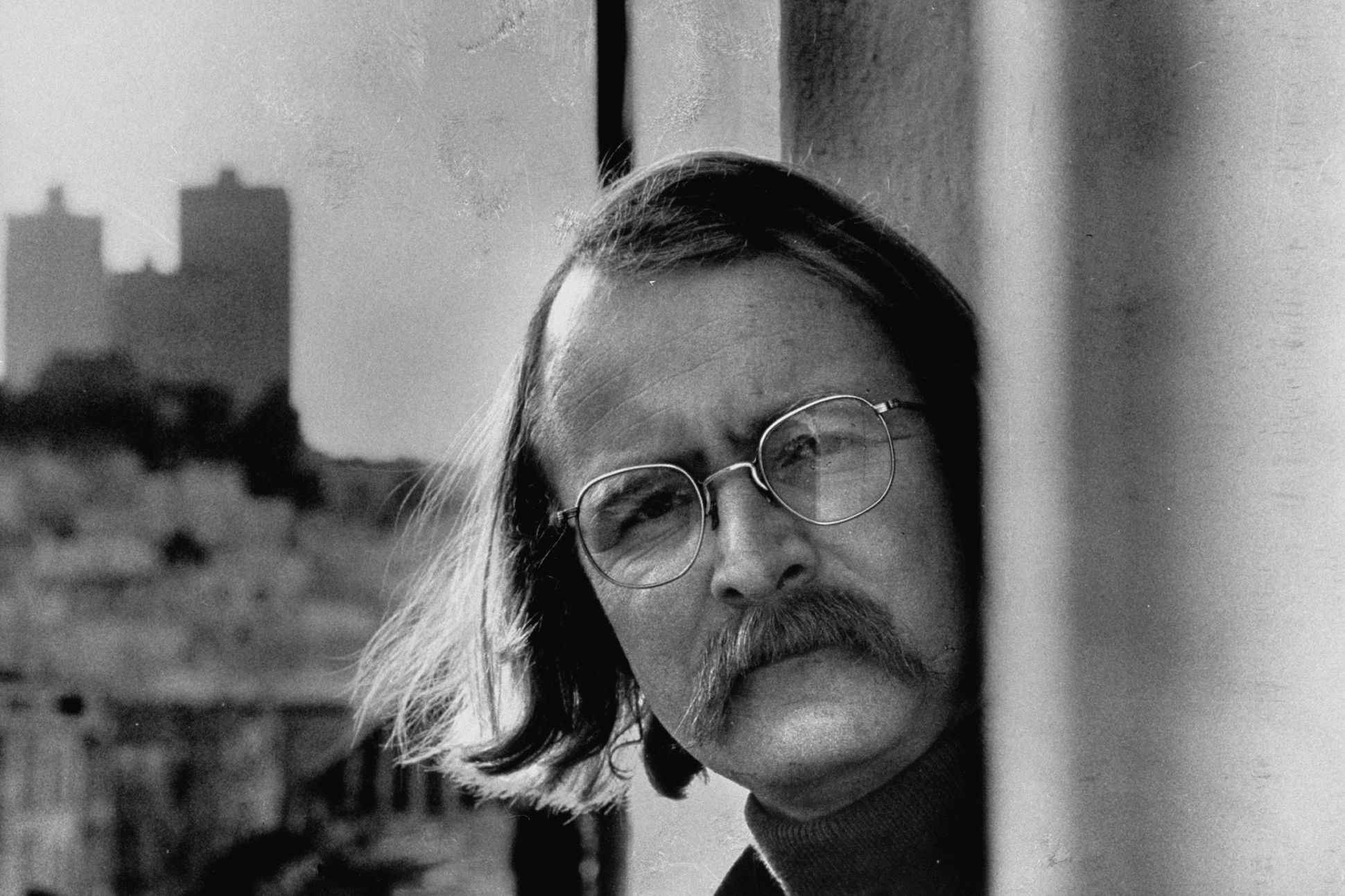
all watched over by machines of loving grace
Christopher Alexander
Tradition
Architecture, pattern languages, design theory
KEY TEXT
A Pattern Language (with Sara Ishikawa and Murray Silverstein, 1977), The Timeless Way of Building (1979), The Nature of Order (2002–2004)
Alexander was an Austrian-born British-American architect who spent fifty years asking a single question — what makes a building, a town, a room feel alive? His answer, worked out across half a dozen books and thousands of pages, was that good design is not invention. It is the careful reuse of patterns that have already been proven to work.
A Pattern Language documented 253 of them. Each one a named, structured solution to a recurring problem — Light on Two Sides of Every Room, Six-Foot Balcony, Small Public Squares. Each pattern linked to the larger and smaller patterns it sits inside. The whole book a system in which any part can be referenced, combined, and adapted.
The software industry read it and never recovered. The Gang of Four's Design Patterns (1994) borrows the structure directly. Wikis trace their origin to Alexander. Agile, Scrum, and the entire pattern-library tradition in design systems — Material, Carbon, Polaris — descend from this one book.
His later work pushed further. The Nature of Order argues that design quality is not subjective. Certain structural properties — levels of scale, strong centres, deep interlock, gradients — produce wholeness in the built environment. Read at face value it sounds mystical. Read carefully, it is the most rigorous attempt anyone has made to name what makes design coherent.
For HUX, this is the lineage. A design system is a pattern language. Tokens are the smallest patterns. Components nest larger ones. Documentation links them. The system holds when the patterns share a language — and falls apart when they do not.
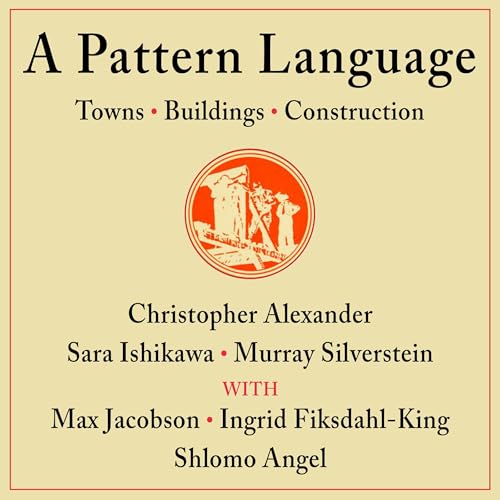
A pattern language gives each person who uses it the power to create an infinite variety of new and unique buildings, just as his ordinary language gives him the power to create an infinite variety of sentences.
LEARN BY DOING
Practice, play and build. Together.
These sessions are tailored to how you work — live problems, real-time questions, your pace. You leave with something built, not just understood.




LET'S TALK
Not sure which session fits?
Tell me where the friction is. We'll work out the right starting point for you or your team.
All flow.
No friction.
hamish@hux.works
+44 (0)7832 839 543