
BRAND
INNOVATION
CULTURE
THE MOUNTAIN METAPHOR
Long before founding HUX, Hamish Duncan made his living as a professional snowboarder.
t was a few weeks after I’d returned from the hospital that the realisation kicked in. I’d lost what felt like the start of a great career in the sport. I’d been riding at a top European level, alongside peers that I’d watched in movies as a teen, a life of travel, mountain exploration from Chamonix to Japan.

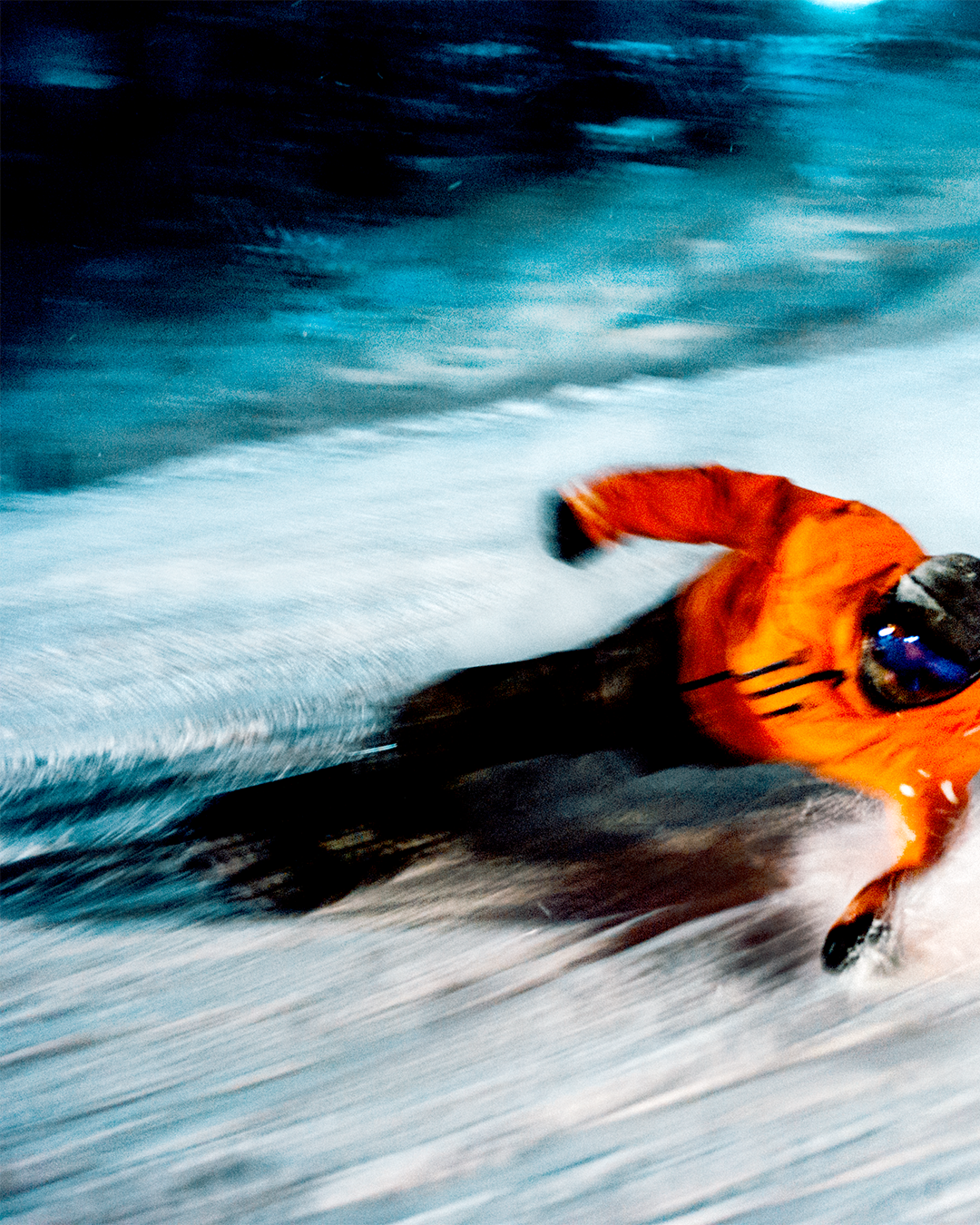
Backside powder carve in Serre Chevalier, French Alps.
It felt as if it had all just vanished. The uncertainty was at its worst whilst I was in hospital awaiting surgery. The days that I lay in traction felt like years. I didn’t know if I’d walk again or not. After the metal rods were installed in my spine to brace the vertebrae that I had burst and fractured, I started to walk again, climb stairs, all with incredible difficulty and exhaustion which was so counter to how I’d felt only a few weeks previously, almost at peak fitness and overall strength. Now it felt like I’d inherited a new body. I reflected a lot back then about life, what I’d learnt from those four years at semi-pro level, the things that were important to me. The mountains. Challenges. Tricks learnt and practised. How life can be so much more than you can expect it to be. That creative optimism began to grow through the weeds of what I can only liken to grief. Bit by bit, with baby steps, I tentatively built my confidence back around art and design. The two A-levels I’d barely completed in between junior worlds contests and preparation for a potential Olympics run. Although slopestyle, my discipline, wasn’t introduced until 2014 in Sochi, the year the legendary British snowboarder Jenny Jones won bronze. I’d never understood code and so began to learn HTML, CSS and build Flash websites. That alone says how long ago that was! I built a portfolio site and began to work freelance until a break into digital media/comms opened up in the event space. I travelled extensively for two or three years, still skateboarding and snowboarding whenever I could but now earning money from creative work. I couldn’t believe that this was also a job.
The Discovery
In the years that followed, I tried everything on for size — art umbrellas with streetwear designers, early e-commerce, PR, advertising production, before landing in visual research for film and commercials. My life was still chaotic, but the creative practice became an anchor to ground me. A way to grow my brain and introduce challenging experiences on my own terms.I worked with an ex-producer of Ridley Scott, a favourite director of mine, and collaborated with incredible creative minds like Frank Budgen and Chris Palmer. This built my confidence that creative careers could be both fulfilling and lucrative if you were good enough and willing to build the systems to support it.Without realising it, I was building systems everywhere I went — operational workflows, content delivery pipelines, archive structures designed with grid systems in InDesign. I practised and grew my knowledge around photography, typography, writing. Each new skill was another anchor point, another way to express myself and make sense of the world.

Photo: Owen Tozer
The Parallel: Play and Possibility
Technology isn’t about replacing humans, it’s about freeing them—just like snowboarding gave me freedom to express myself, I’m now building systems that give designers that same freedom. The goal: remove friction so people can do their best creative work.When we automate the mundane we make space for exploration. We’ve forgotten how to play—you can see it when you’re around children, for whom this is constructive work. It’s the same for adults. We have to learn how to play more. Technology will only increase and improve with time, so this unique essence we have is our point of difference. Friedrich Fröbel, who I’ll link to in another article, developed a set of toys called the Spielgaben that allowed children to understand the lessons of the universe without needing to articulate it intellectually. I believe that no-code tools now present adults with the same opportunity. It’s never been easier and quicker to learn, grow and build with these tools.
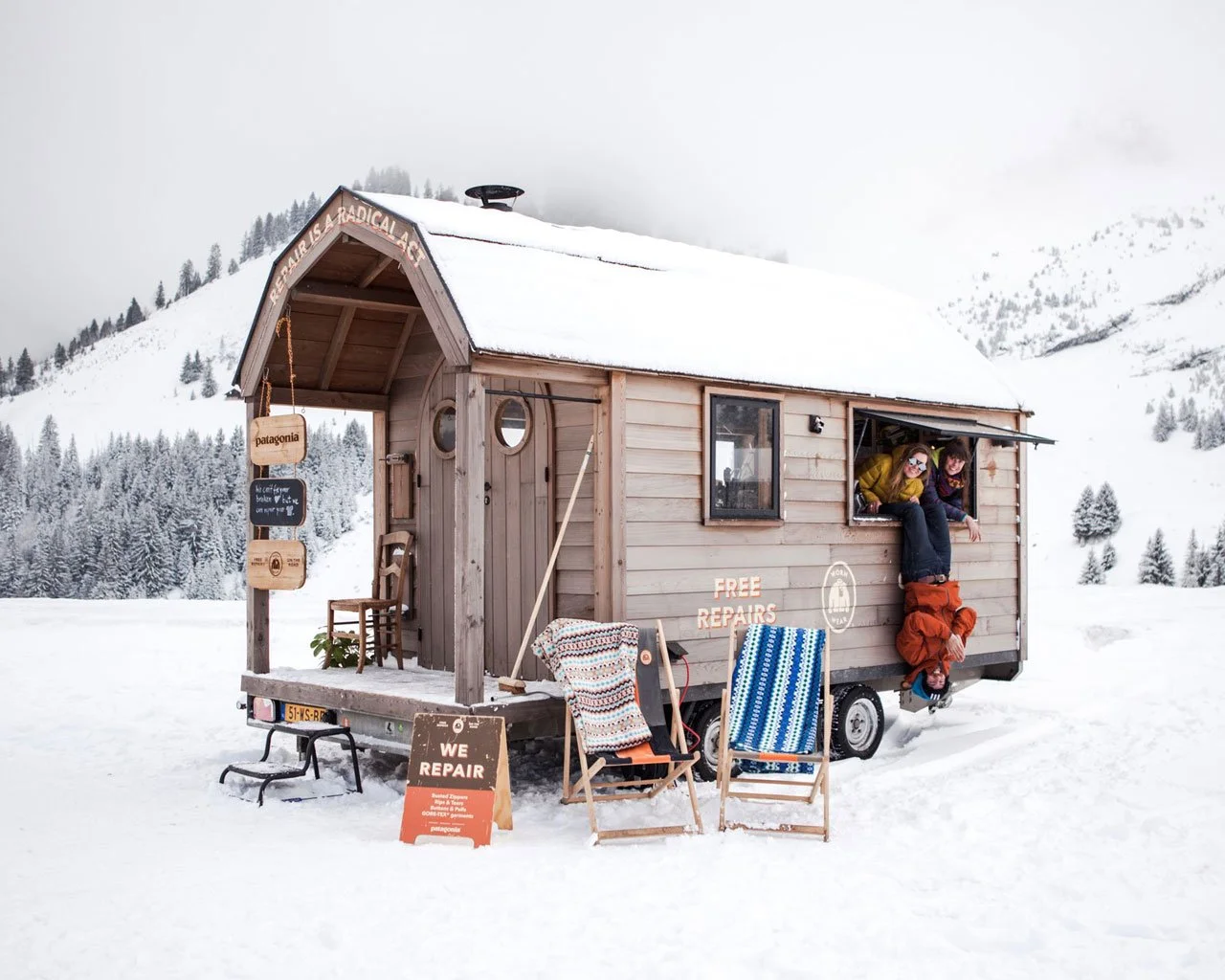
Hamish hangs out with the Patagonia Worn Wear team. Photo: Franzine
The Full Circle
I’ve always enjoyed my time around creative people – designers, developers, all sorts. This continues with my workshops, either one-to-one or with agencies. When someone you’ve worked with for a few weeks turns to you and says you’ve changed their career, that is as good as any powder turn on the planet. Here’s what I want you to know: you’re much better than you think you are. There is so much untapped potential within all of us—it’s just a matter of letting everything else go so that this can come up and out into your world. This is the shift. When you realise how much is possible.

Fountain Of Youth, Niland. Photo: Hamish Duncan
ARTICLES
FURTHER READING
All flow.
No friction.
hamish@hux.works
+44 (0)7832 839 543