AI
WORKFLOWS
MCP
Think and Speak Machine
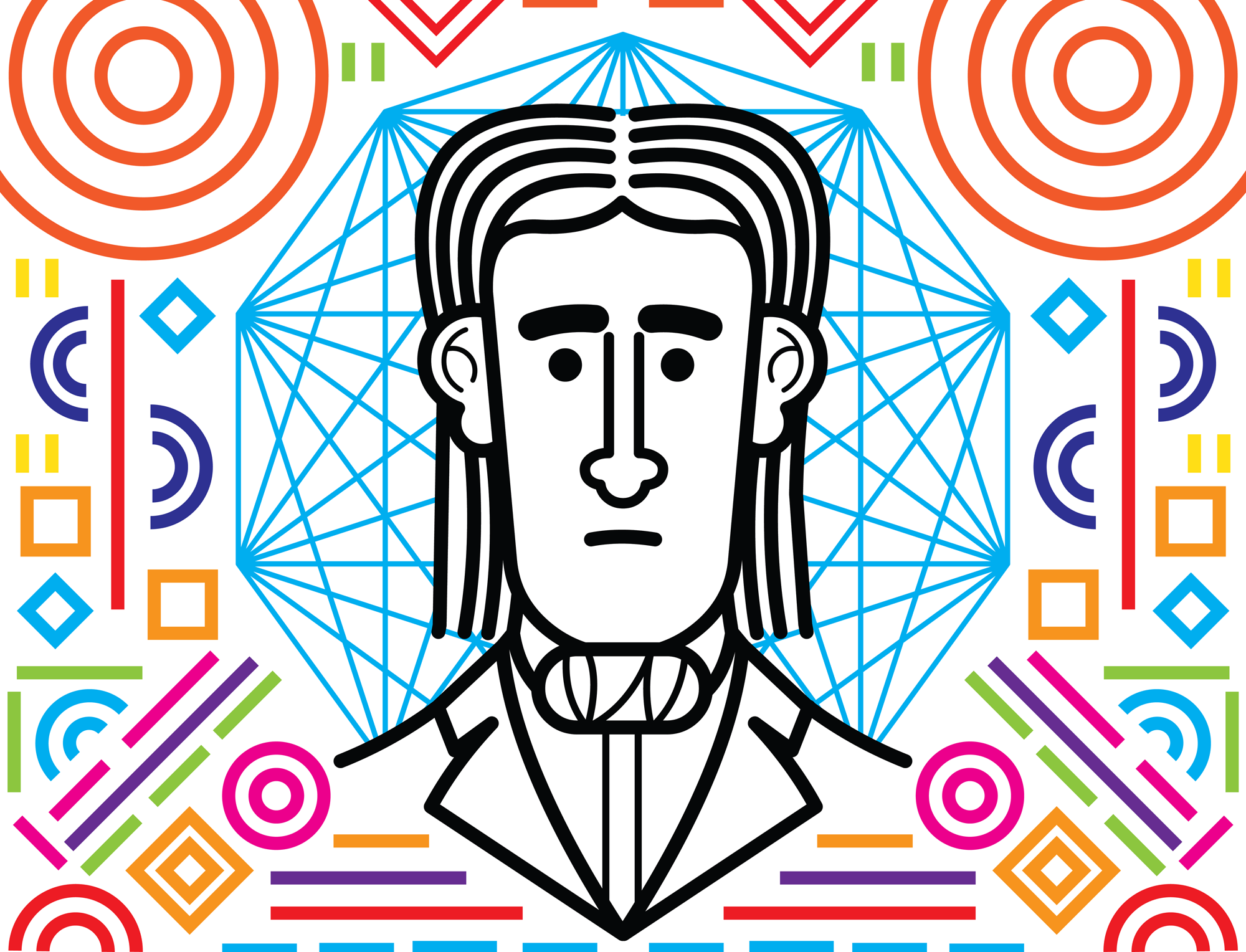
A design is a plan to make something. Forty years on, the machine is the newest reader of the plan.

laude now feels like a turbo-charged hyperactive hybrid French-American quadzillionaire. You've met up a few times at the local apres ski bar, only to realise that he knows everything about your process, what inspires you, how you make things and after just a few nights out together turns up in your inbox with a new tool that has the potential to sink every platform that you've worked with across your entire career.
If you're not used to whiplash, strap in. This is going to be one hell of a ride.
Design dropped last Friday afternoon. LinkedIn lit up (again). By Monday the takes had settled into two camps: the ones who said designers were finished, and the ones who said the tools were a joke. Both wrong.
Joey Banks at Baseline Design put it straight: "If you've started, and you're worrying about it, you're early. Not behind. Early." Later in the same post: "We're designers. We're not our tools." Two lines that cut through a lot of noise.
But the anxiety is real, and it has a source. Most teams are not behind on AI. They are behind on coherence. And that's a harder thing to fix.
The Uncomfortable Truth
Speed without structure is faster chaos. AI amplifies whatever's already there. A clear system gets clearer. A messy one gets messier, louder, harder to untangle.
This is why the Friday-afternoon dread lands the way it does. It's not the tool that feels threatening. It's the suspicion that the ground underneath the tool won't hold. New capability meets old foundation and the foundation shows.
The question to sit with is not how fast can AI help us ship? The question is what are we shipping on top of?
Design System Archaeology
Murphy Trueman calls it archaeology: "the work of reading a system you didn't build, when the team that built it is gone and the documentation is outdated." His instinct, earned over several inherited systems, is to resist the rebuild. Start with tokens instead. Tokens tell you what the previous team believed about structure. Naming tells you what they believed about meaning. The mess is usually context you don't have yet.
Most teams walk into inherited systems. Most teams want to rebuild. Most teams are wrong to rebuild. The archaeology comes first.
This matters now more than it did two years ago, because the system has a new reader.
A design is a plan to make something
Peter Gorb wrote Living by Design for Pentagram in 1978. The book opens with a definition that has not aged: "A design is a plan to make something." Seven words. Gorb follows them with a warning: "The design is not to be confused with its end purpose.
"The plan is the thing. Not the aesthetic. Not the artefact. The plan underneath, the one that makes the artefact possible.
A design system is a plan. Tokens are the plan for colour, space, type. Components are the plan for assembly. Documentation is the plan for use. The polish on top — the Dribbble shot, the case-study hero — is the end purpose. Gorb warned us not to confuse the two. Forty years later the confusion is what most teams live inside.
Gorb also noticed something strange about design classification: "It shifts according to where we stand. The closer we try to use it, the less useful it becomes." The system from the outside looks like one thing. The system from the inside, at the point of maintenance, looks like another. Murphy's archaeology is the same observation, expressed as a verb.
Thinking is distributed
Kahneman gave us two systems. Fast and slow. Intuitive and deliberate. Useful, but both sit inside the head. The actual work of design never did. It lives in sketches, in Figma files, in codebases, in the naming conventions a team settled on three years ago and has quietly renegotiated twice since.
Andy Clark calls it the extended mind. Ed Hutchins wrote a whole book on cognition in the wild. Annie Murphy Paul pulled the field together in The Extended Mind. Different sources, same observation: thinking leaks out of heads and into tools, environments, artefacts. The head is one node in a network.
A design system is a node in that network. It stores judgement so the team does not have to hold the whole model at once. Naming is memory. Tokens are decisions made durable. Documentation is reasoning, written down so the next person can pick up the thread.
This is what HUX calls design as a shared language. A system that humans and machines read from the same page.
Claude now feels like a turbo-charged hyperactive hybrid French-American quadzillionaire
The newest reader
AI did not invent distributed thinking. It joined it. The machine is another node, and it reads what every other node reads — the tokens, the naming, the documentation. Whatever the system encodes, the machine uses. Whatever the system leaves blank, the machine guesses.
The question is not will AI replace the designer? The question is is the system readable by the newest member of the team?
When the answer is yes, the machine does what every good node in a network does. It takes some thinking off the human's plate so the human can get on with the thinking that matters. Judgement. Intent. Taste. The things the machine cannot do alone.
Joey's morning
Joey describes a morning at Baseline. Four hours. Three projects in parallel.
Typography audit through TJ Pitre's Figma Console MCP server. Not a list of styles — an actual read of where each style lives, what it does, where to consolidate. Audit in hand, Claude generated the text styles back into Figma. Fifty-plus components ready for application, with a review space set aside for anything that shifts.
While that ran, Joey prototyped a token reference site in Claude Design. Click a primitive, see every semantic variable that depends on it. The prototype moved into Claude Code as a maintainable web app that will sit alongside the team's internal tools.
Joey's own line on what changed: "I'm spending more time getting closer to the thinking part of the work."
Read the morning through a System 3 lens and the move is clear. Joey is not using three tools. Joey is thinking across three tools. Cognition distributed. The machine holds the inventory. The human holds the judgement. Build at the speed of thought, as HUX has been putting it — because the friction between thought and build has narrowed to near zero.
None of it works without the substrate. Joey's workflow runs on tokens that mean something, components that map to intent, naming the machine can parse. Strip that out and each step breaks on contact with the last.
The Stages
Josh Clark at Big Medium laid out five stages of how organisations absorb new technology. Retool, Reorganize, Invent, Bloom, Disrupt. His argument is that most teams are stuck at Retool — using AI to do the same work faster — and the real value sits higher up, in Invent. His line: "Design imagination and insight are the scarce resources that become even more essential." Agreed.
The piece Clark underplays is the starting line. Retool works on any system, because any team can ask a machine to do the same task faster. Invent does not. Invent asks the machine to think with you, which means the machine needs something to think with. Tokens that hold meaning. Components that express intent. Documentation the machine can parse without hallucinating the gaps.
Coherent system, compound invention. Incoherent system, compound chaos. The leap from Retool to Invent is the leap from humans use machines to humans and machines think together. Foundation work, not tool work.
This is the path HUX has mapped as the maturity journey. Chaos to clarity to confidence to velocity to advantage. Not a tool roadmap. A foundation roadmap.
Identity is governance
Gorb's book gives a fourway classification. Product, environment, information, identity. Identity, he notes, is "a complex activity much concerned with organisational behaviour and policy." Identity is not the logo. Identity is how the organisation behaves.
The same holds for design systems. The naming layer is the identity layer. It encodes how the team behaves, what it values, what it treats as the same thing and what it keeps separate. The machine does not read the logo. The machine reads the naming. A team with a legible identity layer hands the machine a map. A team without one hands over chaos and asks the machine to make sense of it.
This is why the token layer is the first place to look and the last place to skimp. Tokens are where the organisation tells the machine what it believes.
Identity is governance
Gorb's book gives a fourway classification. Product, environment, information, identity. Identity, he notes, is "a complex activity much concerned with organisational behaviour and policy." Identity is not the logo. Identity is how the organisation behaves.
The same holds for design systems. The naming layer is the identity layer. It encodes how the team behaves, what it values, what it treats as the same thing and what it keeps separate. The machine does not read the logo. The machine reads the naming. A team with a legible identity layer hands the machine a map. A team without one hands over chaos and asks the machine to make sense of it.
This is why the token layer is the first place to look and the last place to skimp. Tokens are where the organisation tells the machine what it believes.
Hamish Duncan is the founder of HUX, a design systems consultancy that helps creative agencies and product teams build coherent, machine-readable systems. Find out more at hux.works.
ARTICLES
Further Reading